-
 Visit our shop
-
English
Visit our shop
Most research teams spend their first 6 to 8 weeks struggling with ROS 2 setup before writing a single line of application code.
Developing a mobile robot with ROS2 involves several technical steps: sensor integration, software configuration, communication between components, and access to the embedded system.
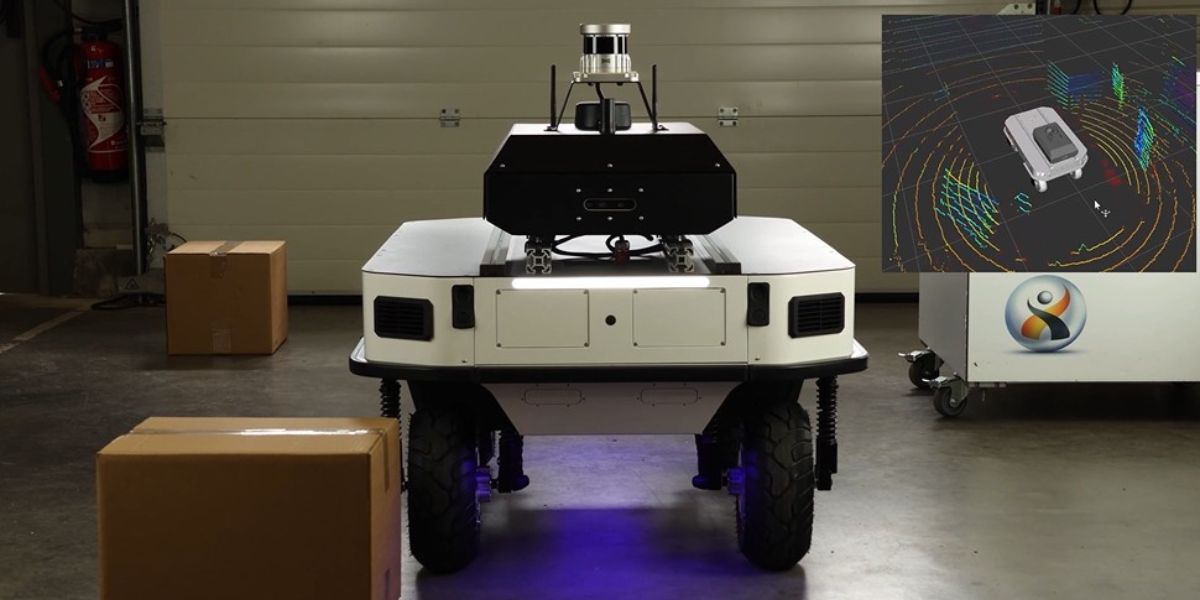
The ROS2 R&D Kit brings all these elements together into a pre-configured platform, designed to simplify the setup and development of robotic applications.
Until April 30, 2026
-20%
OFF
ROS2 R&D KITS
Before starting tests on a mobile robot, a consistent set of hardware and software components is required:
In many projects, this phase represents the technical starting point, even before working on application-level functionalities.
The ROS2 R&D kit includes several components that can be integrated into your mobile robot:
The kit also includes:
The goal is to provide a consistent technical foundation, already prepared for developing robotic applications.
Once this add-on is in place, teams can focus more directly on applications development such as:
The embedded system can also be monitored remotely via access to the onboard PC, with visualization of system status and sensor feedback.
This approach allows teams to focus on development and testing rather than initial system integration.
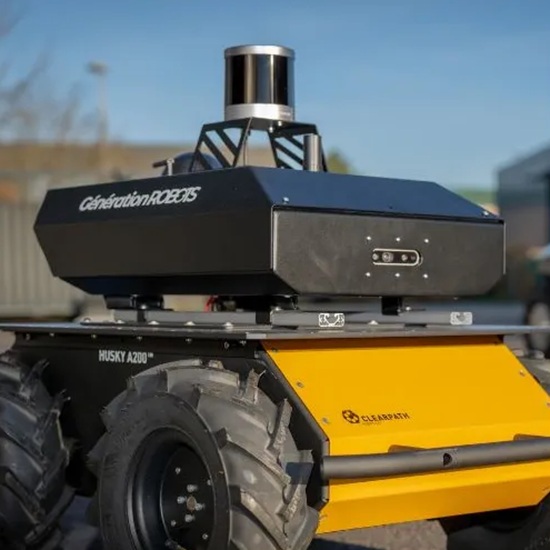
The ROS2 R&D Kit is compatible with AgileX Robotics and Clearpath Robotics mobile platforms, and can also be adapted to other robotic systems.
Feel free to contact us to discuss your project 👇
Not sure which configuration matches your platform? Describe your project and we’ll recommend the right one. 👇
As part of a robotics R&D project conducted in a complex environment, one of our clients (applicative research) chose to use an AgileX Robotics Scout 2.0 mobile robot combined with the ROS2 R&D Kit from Génération Robots.
The objective was to quickly have an operational mobile platform to start initial testing, without going through a long technical setup phase.
Thanks to pre-integrated electrical and software components, sensors designed to work together, and an already accessible embedded system, the team was able to focus more quickly on testing and development rather than installation and initial configuration.
In this context, this approach saved several weeks in setup, development, and initial testing. It also enabled faster work on topics such as perception, navigation, and sensor data processing, while maintaining the flexibility to evolve the platform with additional components as needed.
This use case highlights the value of an already operational platform in an R&D context: less time spent on integration, more time dedicated to development and testing.
The ROS2 R&D kit follows a modular development approach, with an open architecture that allows additional components to be integrated and the platform to evolve according to project requirements.
It can also be easily adapted to different mobile robot models and brands:
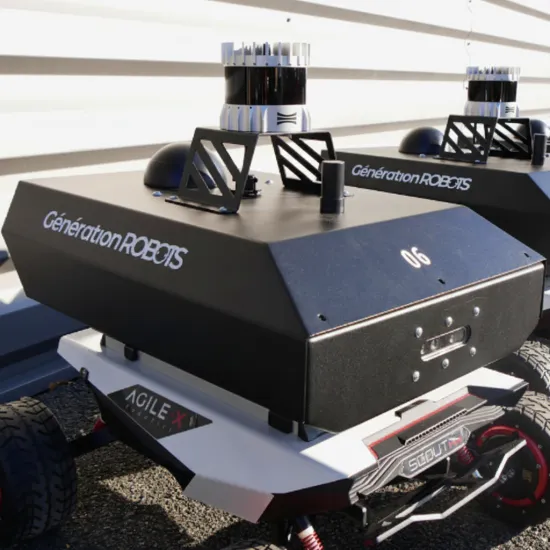
This kit follows the same approach: providing a structured technical foundation to facilitate the launch of ROS2-based projects.
When project requirements go beyond a standard configuration, GR Lab can also support platform customization or the development of more specific robotic solutions, depending on project constraints.
No endless forms, no waiting around. Choose the option that suits you best:
💬 A question?
🔎 Want to see it before you buy?
🎯 Ready to move forward?

Vanessa Mazzari
CMO at Génération Robots