-
 Visit our shop
-
English
Visit our shop
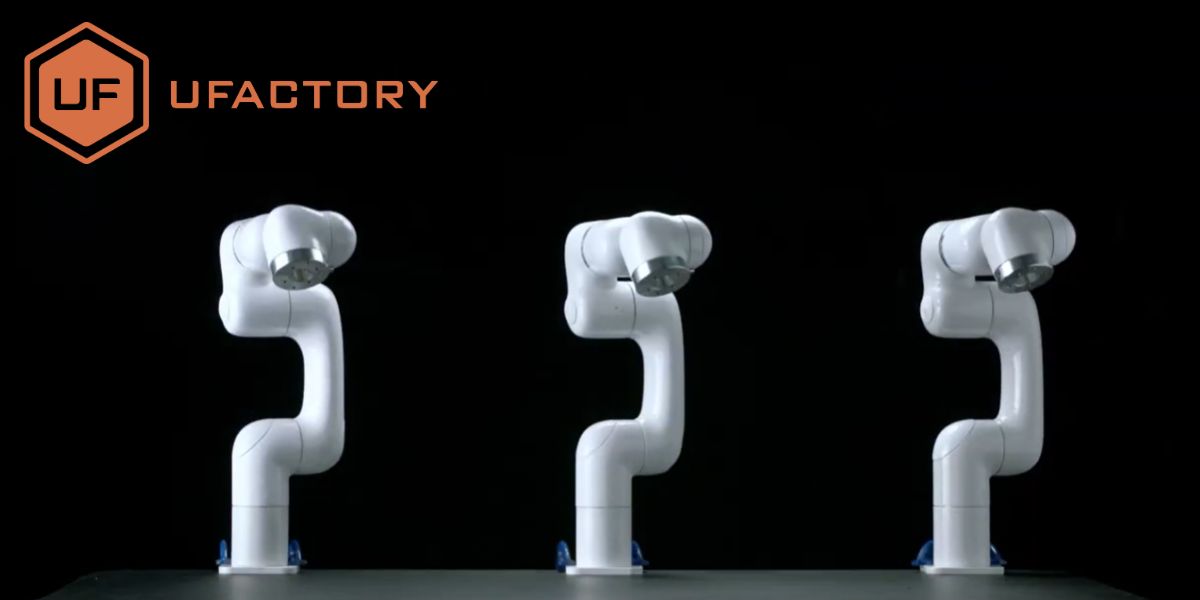
For labs, innovation hubs, R&D teams, and education: a simple guide to easily choose between Lite 6, xArm, and 850, and match the right end-effector (gripper or vacuum) to your tasks.
In laboratories, R&D, and education, the challenge isn’t making a robotic arm work once.
The challenge is to:
When a range is easy to understand, it becomes simpler to choose a suitable model without ending up with something too complex for the real need—or wasting time on options that don’t change the outcome.
FURTHER READING
UFactory Robotic Arms: maximize your productivity at lower cost
👉 For an overview of the brand and use cases.
Gripper (claw/gripper)
Prefer if:
Vacuum (suction)
Prefer if:
Rule of thumb: if you’re not yet sure what objects will be handled, start with a gripper. Suction is very effective, but more dependent on surface type (flat, smooth, and clean).
Flexibility
You are testing multiple scenarios, changing objects and tools, and regularly adjusting trajectories.
Repeatability
You want stable behavior for a protocol (test bench, calibration, data acquisition, measurable demonstration).
This distinction often points to the xArm when you need flexibility to experiment, or to the uFactory 850 when you want highly repeatable results.
The Lite 6 is especially well-suited to learning and training, as well as setups with a small footprint (workbench, lab table, teaching bench).
When to choose it
Arm + end-effector (depending on your objects)
Watch point: with suction, testing on real objects is important → a slightly porous or dusty surface can reduce the success rate.
When to choose it
Arm + end-effector (depending on your objects)
Watch point: as soon as multiple people use the station, document key parameters (speeds, limits, trajectories, grip settings). That’s often where results become harder to reproduce.
When to choose it
Arm + end-effector (depending on your objects)
Watch point: as soon as multiple people use the station, document key parameters (speeds, limits, trajectories, grip settings). That’s often where results become harder to reproduce.
Because the end-effector often determines the real success rate. A good arm with an unsuitable grip leads to an unstable setup.
When objects are porous, dusty, highly textured, irregular, or when surface conditions aren’t controlled. In these cases, a gripper is often more forgiving.
By locking software versions, saving critical parameters (frames, limits, speeds), and keeping a simple reference test to verify behavior after each change.

Vanessa Mazzari
CMO at Génération Robots