
Humanoid robots Booster Robotics
Booster Robotics humanoid robots are designed as research and education platforms to develop, test and demonstrate algorithms in realistic conditions: humanoid locomotion, control, perception and human-robot interaction. The range is built around two complementary models: the Booster T1 (large format, high compute power) and the Booster K1 (compact, portable and accessible format).
Why choose a Booster Robotics humanoid robot?
- Development-oriented platforms: API/SDK, ROS2 compatibility and the ability to work in simulation to speed up iterations.
- Perception & interaction: 3D / depth camera depending on the model, 9-axis IMU, microphones and a speaker for voice and interaction.
- Project-driven approach: network integration (Wi-Fi, Ethernet), access to state information, low-level control and reproducible test scenarios.
- Education + R&D use: STEM/robotics courses, lab work, prototyping, demonstrations and competitions.
Booster T1: large-format humanoid for advanced locomotion and R&D
The Booster T1 is a large humanoid robot (~1.20 m) intended for teams working on advanced topics: balance, transitions, recovery, multimodal perception and, depending on the version, manipulation. It features a high-end compute platform (NVIDIA AGX Orin, up to 200 TOPS) and can be selected in several configurations depending on grasping needs.
T1 versions:
- Standard: priorities are locomotion, perception, interaction.
- With grippers: utilitarian grasping (pick/place) for demo scenarios and simple manipulation.
- With dexterous hands: fine manipulation, typically requiring more tuning (calibration, control, scenarios).
Booster K1: compact, portable and accessible humanoid for education
The Booster K1 is a compact humanoid (95 cm, ~20 kg) designed for intensive use in the classroom, in labs and for demonstrations. With 22 degrees of freedom, onboard sensors (3D/binocular camera, 9-axis IMU, microphones, speaker) and Python / ROS compatibility depending on your stack, the K1 is an effective base for learning and prototyping.
K1 versions:
- Geek: entry level for prototyping and coding.
- Edu: configuration adapted to educational institutions (accessories, support, educational use).
- Pro: for R&D and more demanding AI workloads (maximum compute power within the K1 range).
Which robot should you choose: Booster T1 or Booster K1?
| Your need | Recommendation |
| Advanced locomotion, complex scenarios, large-format robot | Booster T1 |
| Educational projects, lab sessions, demos, portable robot | Booster K1 |
| Manipulation (utilitarian grasping) | T1 with grippers (depending on objectives) |
| Fine manipulation / dexterity | T1 with dexterous hands (with integration effort) |
| “Ready-to-carry” humanoid robot for classes and events | K1 |
Use cases: education, research, demonstrations
- STEM & robotics education: Python/ROS, control, perception, sensor integration, networking.
- Research & R&D: locomotion, planning, learning, interaction, data collection.
- Demonstrations & competitions: reproducible scenarios, fast integration, algorithm demos.
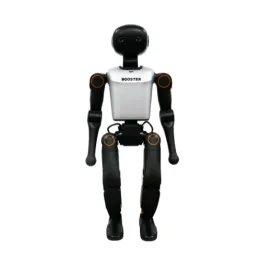
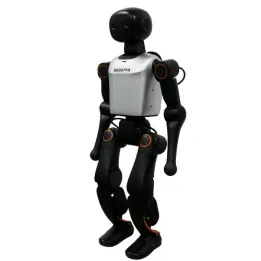
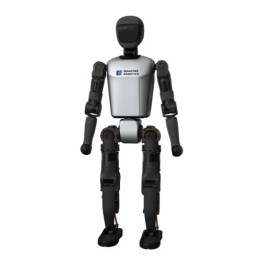
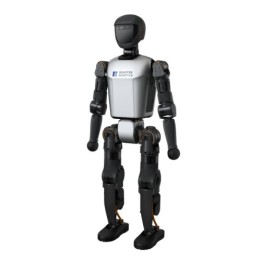
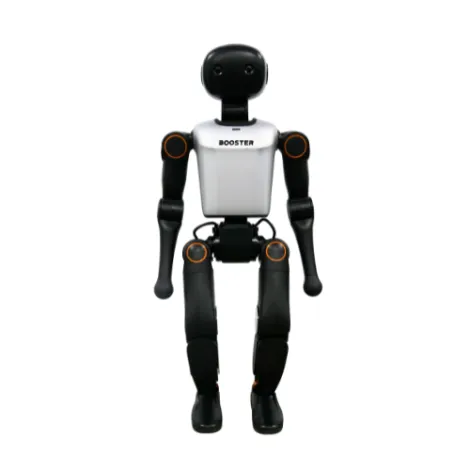
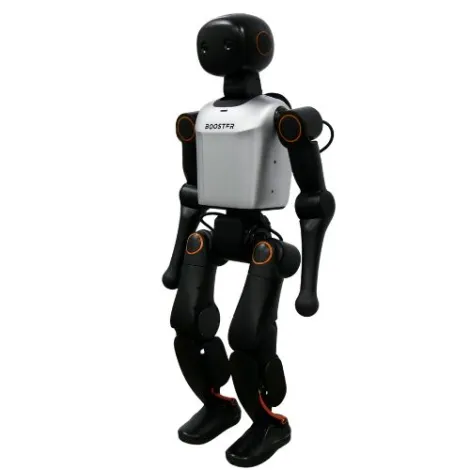
The Booster K1 is a humanoid robot designed for education, research, and interactive demonstration. It combines mobility, computing power, and ergonomics in a compact, ready-to-use format.

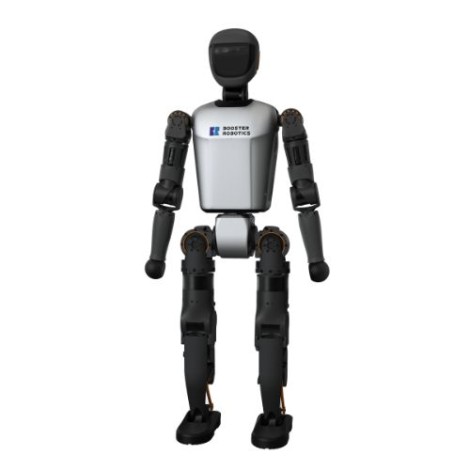
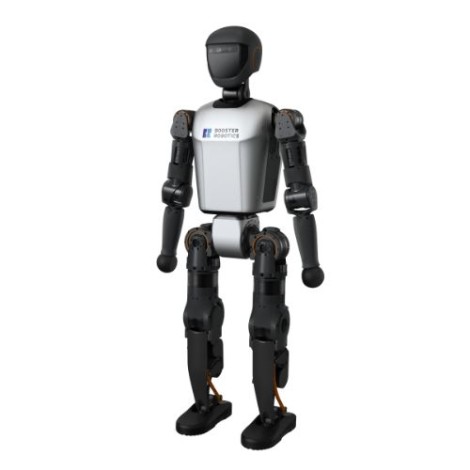
The Booster T1 is a lightweight, high-performance, open-source humanoid robot designed for developers and researchers, featuring a complete API, ROS2 compatibility, and advanced simulation and AI capabilities.