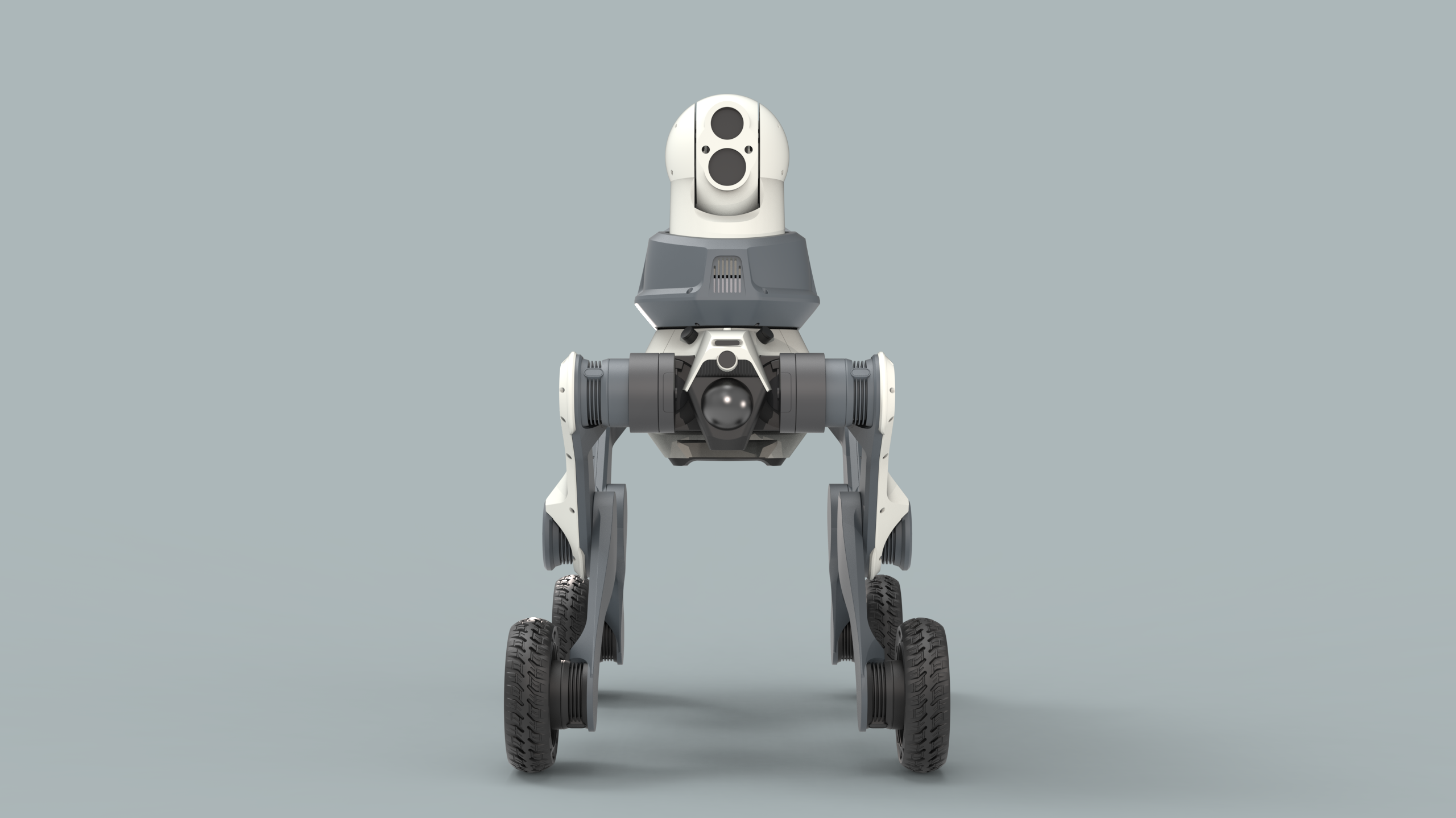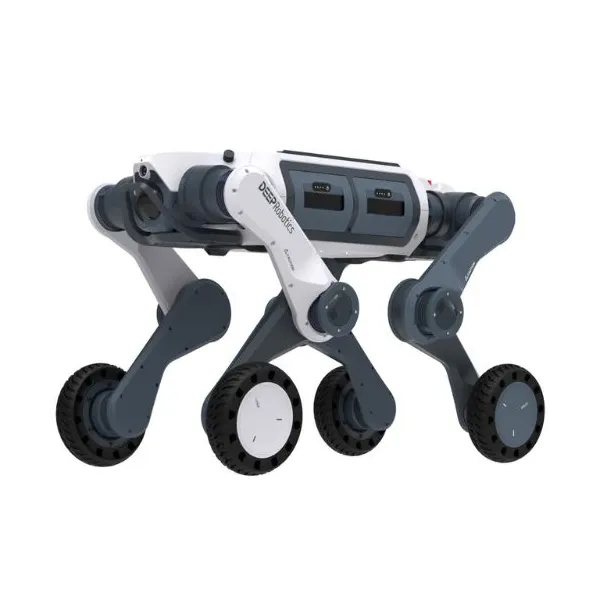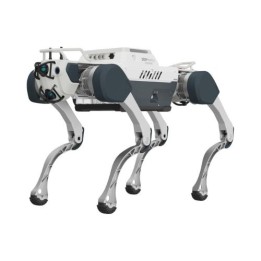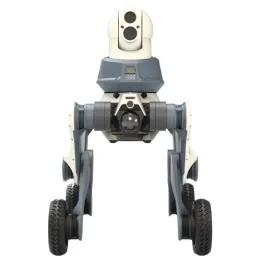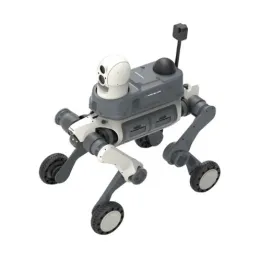

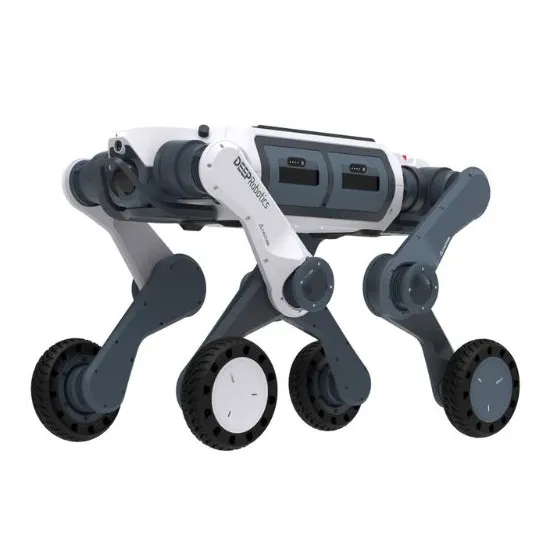

LYNX M20 Pro robot dog resources
FAQ – LYNX M20 Pro
What types of environments is this quadruped robot suited for?
The LYNX M20 Pro is designed for industrial, outdoor, or unstructured environments: technical sites, construction sites, tunnels, inspection areas, uneven terrain, or hard-to-access zones.
Can it be used for autonomous inspection and mobile surveillance?
Yes. Thanks to its 360° perception, LiDARs, cameras, and obstacle avoidance functions, it is well suited to robotic inspection, autonomous patrol, and intelligent perimeter surveillance scenarios.
Is it relevant for robotics research and prototyping?
Yes. It provides a strong platform for R&D projects in quadruped locomotion, SLAM, autonomous navigation, embedded AI, sensor fusion, and robot software development.
Can additional sensors or a specific payload be added?
Yes. The robot features a mounting system and integration interfaces that allow the addition of sensors, application-specific modules, or even a robotic arm or custom equipment depending on the use case.
Is it designed for long missions?
It provides up to 3 hours of battery life unloaded, with hot-swappable batteries. Depending on the configuration, this helps reduce downtime and supports extended operations.
Is the LYNX M20 Pro suitable for harsh conditions?
Yes. Its IP66 rating and operating range of -20 °C to 55 °C make it suitable for demanding environments involving dust, humidity, and thermal constraints.