Unitree Robotics humanoid robots
Unitree Robotics humanoid robots provide an ideal platform to explore biped locomotion, manipulation, human–robot interaction, and embedded AI. From R1 EDU and G1 EDU focused on education and research, to more ambitious platforms such as H1 / H1-2, Unitree offers a range suited to labs, engineering schools, R&D centers, and teams looking to develop advanced scenarios: control, perception, navigation, teleoperation, and sensor integration. In this category, we highlight robots designed to accelerate experimentation, structure testing, and simplify software integration for your application.
Why choose a Unitree humanoid robot?
- Research platform: ideal for working on biped locomotion, balance, control, and motion planning.
- Interaction & manipulation: a solid base to explore object manipulation, human–robot interaction, and assistance.
- Perception & AI: sensor integration (vision, depth, LiDAR as needed) for navigation, scene understanding, and tracking.
- Software integration: suited for robotics development (control, navigation, research applications, teleoperation).
- Deployment & experimentation: useful for demos, controlled field trials, and validating scenarios in real-world conditions.
Which Unitree humanoid robot should you choose?
R1 EDU: education & introduction to humanoid robotics
For who? schools, universities, makerspaces, robotics clubs, teaching teams.
Why? a consistent base to learn, test, and structure projects around control, perception, and interaction, with a “setup / experimentation” approach well suited to education.
G1 EDU: applied research & behavior development
For who? labs, R&D centers, teams working on locomotion, planning, and perception.
Why? a more ambitious platform to develop behaviors (locomotion, stability, navigation, interaction), integrate your sensors, and move toward more complex scenarios.
H1 / H1-2: humanoid platform for advanced projects
For who? demanding R&D projects, teams working on advanced demos and manipulation/locomotion scenarios.
Why? when you need an “advanced robotics” platform (control, perception, software integration) with higher ambitions in terms of experimentation and demonstrations.
Typical applications
- Research & education: biped locomotion, control, planning, perception, human–robot interaction.
- Manipulation & interaction: object grasping, gestures, assistance scenarios, human–robot interfaces.
- Embedded AI testing: navigation, scene understanding, tracking, and autonomous behaviors.
- Teleoperation: remote operation, guided trials, and data collection.
- Demos: trade shows, lab tours, technology communication, and prototyping.
How to choose (quick guide)
- Goal: education/onboarding (R1 EDU) vs more advanced research (G1 EDU) vs demanding projects (H1 / H1-2).
- Complexity level: simple demo vs multi-function scenarios (perception + control + interaction).
- Sensors & compute: needs for vision, depth, onboard computing, and mechanical mounting.
- Scenario type: locomotion, manipulation, HRI, teleoperation, navigation.
- Support & assistance: integration, commissioning, training, and project follow-up.
FAQ
Which Unitree humanoid robot should we choose for a school or a university?
R1 EDU is generally the most relevant for teaching and getting started. For more advanced applied research, G1 EDU is often a better choice.
What’s the difference between R1 EDU and G1 EDU?
R1 EDU is primarily focused on learning and educational projects, while G1 EDU targets more ambitious scenarios and more advanced research (behaviors, sensor integration, experimentation).
What are H1 / H1-2 used for?
H1 / H1-2 are aimed at demanding humanoid projects where the priority is experimentation capability and advanced scenario demonstrations (locomotion, perception, software integration, teleoperation).
Can we integrate our sensors and our software?
Yes. These robots are generally used as integration platforms. The best choice will depend on your mounting constraints, onboard computing requirements, and the complexity of your scenarios.
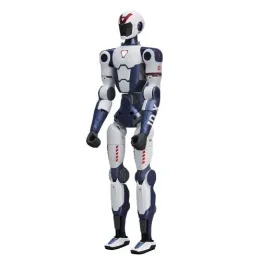
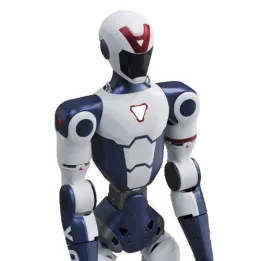
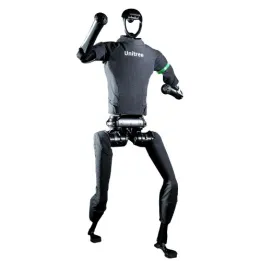
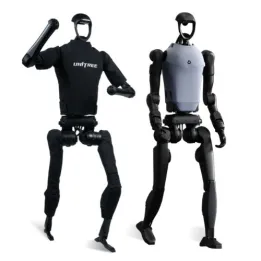
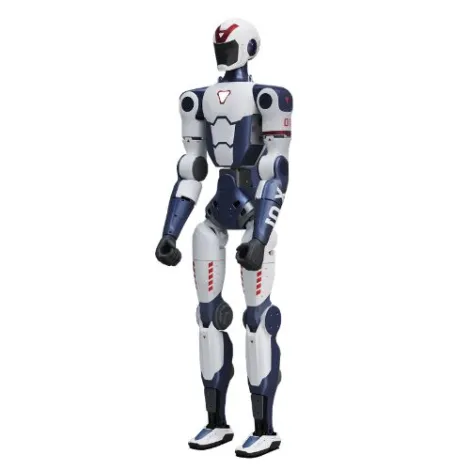
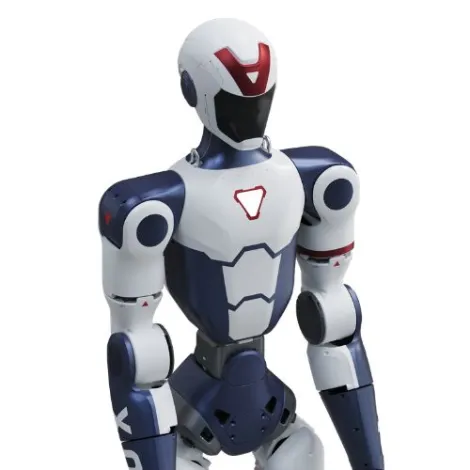
The Unitree R1 Edu is an R&D and education humanoid platform focused on locomotion, manipulation, and on-board AI, with access to high- and low-level programming and simulation (e.g., Isaac Sim).
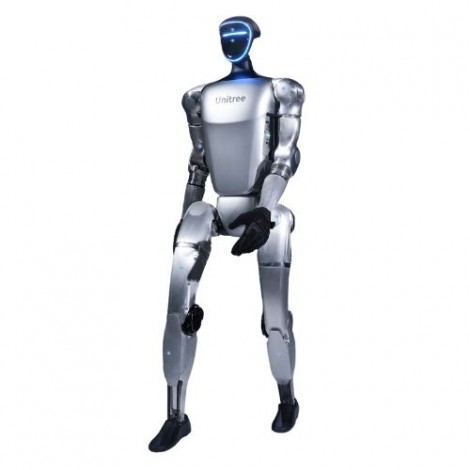
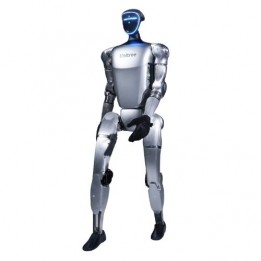
The Unitree G1 Edu is a compact humanoid robot for education and research, featuring depth + 3D LiDAR sensing, a Jetson Orin computing platform, and optional dexterous hands for manipulation and development.
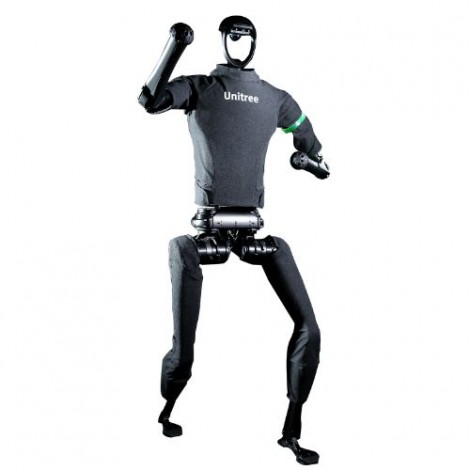
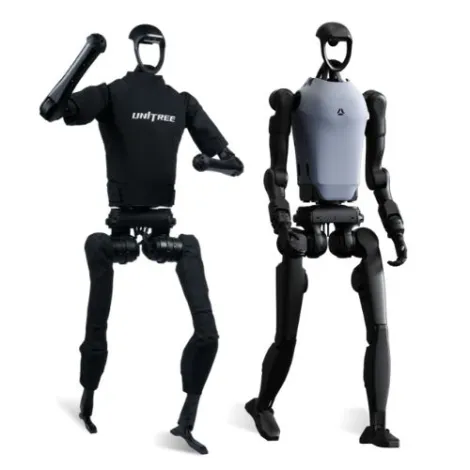
The Unitree H1 / H1-2 is a full-size humanoid designed for R&D, combining dynamic locomotion with 360° 3D perception (3D LiDAR + depth camera).