
Agibot - Quadruped robots
AgiBot quadruped robots are intended for laboratories, universities, innovation centers, integrators, and companies looking for a mobile robotics platform for projects involving locomotion, navigation, embedded perception, robotic inspection, and R&D.
This category notably includes the AgiBot D1 Pro, AgiBot D1 Ultra, and AgiBot D1 Max Pro models, three quadruped robots designed for different use cases depending on the required level of mobility, integration, robustness, and payload capacity.
AgiBot quadruped robot: for which applications?
An AgiBot quadruped robot can be integrated into projects involving technology demonstration, exploration of complex terrain, data collection, technical inspection, sensor integration, software development, or algorithm validation in real-world environments.
The quadruped format is particularly relevant when the robot needs to operate on uneven ground, overcome obstacles, move outdoors, or access areas where a wheeled base reaches its limits more quickly.
AgiBot D1 Pro: compact quadruped robot for dynamic mobility and experimentation
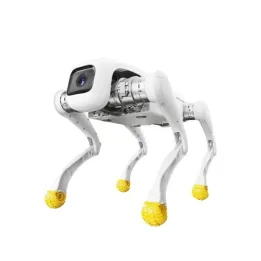
The AgiBot D1 Pro quadruped robot is a compact platform suited to projects involving dynamic locomotion, navigation on varied terrain, robotic demonstration, and light mobile robotics.
The D1 Pro is well suited to projects where compactness, agility, and ease of deployment are important criteria. It can be selected for demonstrators, academic trials, mobility testing, or development work based on a quadruped platform intended to operate in complex environments.
AgiBot D1 Ultra: quadruped platform for inspection, perception, and integration
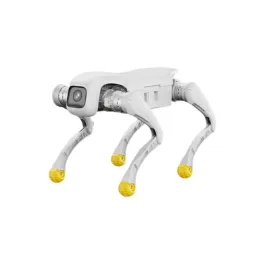
The AgiBot D1 Ultra quadruped robot is intended for organizations seeking a platform more focused on inspection, module integration, embedded perception, and the development of advanced functions.
The D1 Ultra is particularly suitable for projects involving navigation, instrumentation, sensor integration, software building block validation, and applied robotics. It provides a good balance for teams wishing to go beyond a purely demonstrative use case and have a more complete base for technical testing.
AgiBot D1 Max Pro: quadruped robot for industrial inspection and field missions
The AgiBot D1 Max Pro quadruped robot meets more demanding requirements in terms of payload, endurance, and field use. It is intended for projects that require a higher-capacity quadruped platform for industrial inspection, equipment transport, outdoor robotics, or experimentation in challenging environments.
The D1 Max Pro is particularly relevant for technical sites, outdoor data collection missions, robotic inspection scenarios, or projects requiring the integration of heavier payloads than a compact quadruped platform can support.
Which AgiBot quadruped robot should you choose?
The choice between AgiBot D1 Pro, AgiBot D1 Ultra, and AgiBot D1 Max Pro mainly depends on the expected level of integration, the type of environment, and the intended mission.
- D1 Pro: demonstration, dynamic mobility, experimentation, light mobile robotics.
- D1 Ultra: inspection, perception, navigation, sensor integration, advanced development.
- D1 Max Pro: industrial inspection, higher payload, field missions, equipment transport, outdoor robotics.
Why integrate an AgiBot quadruped robot into a professional or scientific project?
AgiBot quadruped robots make it possible to address projects at the intersection of mobile robotics, embedded artificial intelligence, navigation, perception, and robotic inspection. They can be used both for demonstration purposes and as part of a technical validation, application integration, or experimental development process.
For a company, laboratory, or innovation center, choosing an AgiBot quadruped robot means having access to an identifiable platform for testing new use cases, developing field robotics applications, and validating mobility, perception, or inspection scenarios under near-real conditions.
FAQ – AgiBot quadruped robots
What types of projects are AgiBot quadruped robots intended for?
They are suitable for robotic demonstration, locomotion on complex terrain, applied research, inspection, navigation, sensor integration, and software development projects.
What is the difference between the D1 Pro, D1 Ultra, and D1 Max Pro?
The D1 Pro is more focused on dynamic mobility and compact projects. The D1 Ultra is better suited to research, inspection, and technical integration projects. The D1 Max Pro is designed for more demanding uses in terms of terrain, payload, and industrial missions.
Which AgiBot quadruped robot should be chosen for a laboratory or university?
For projects involving mobility, perception, navigation, or sensor integration, the D1 Ultra is often the most relevant choice. The D1 Pro may suit lighter uses, while the D1 Max Pro is relevant for more demanding experiments in real-world environments.
Are AgiBot quadruped robots suitable for robotic inspection?
Yes, especially the D1 Ultra and D1 Max Pro, which are suited to inspection, navigation, embedded perception integration, and field mission scenarios.
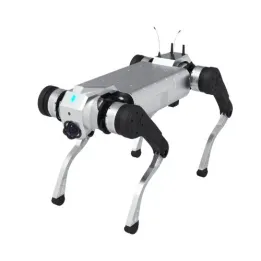
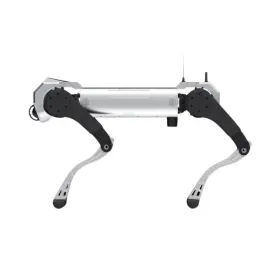
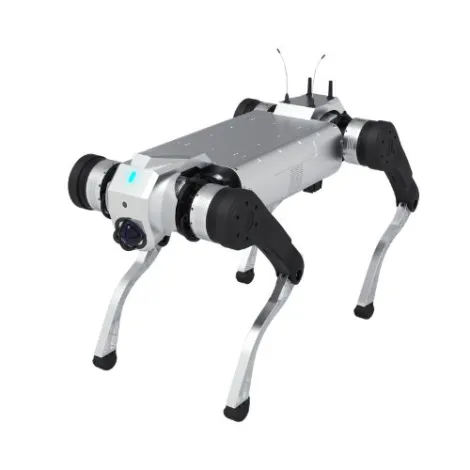
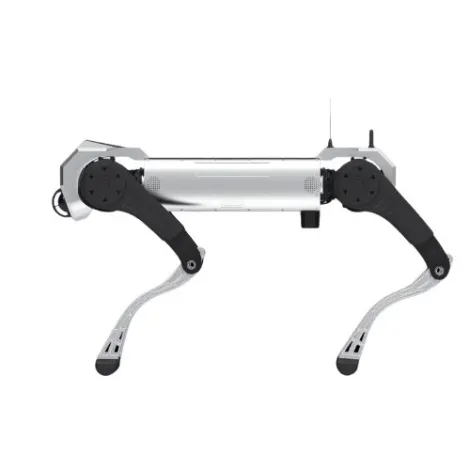
The AgiBot D1 Max Pro is a quadruped robot designed for industrial applications, inspection, and mobile robotics projects requiring greater payload capacity and longer endurance.
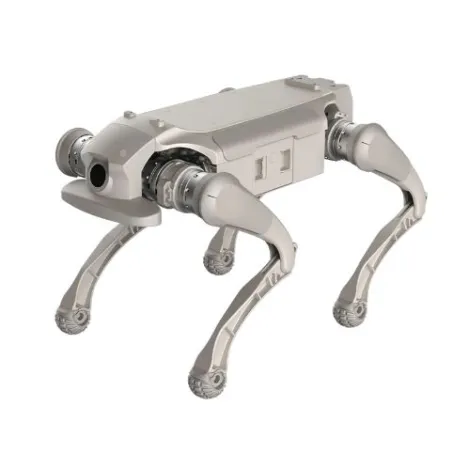
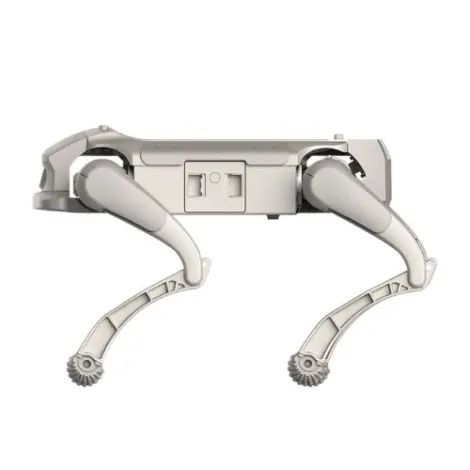
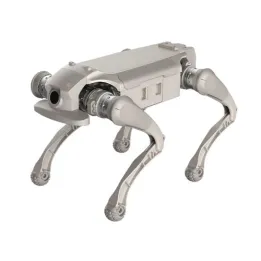
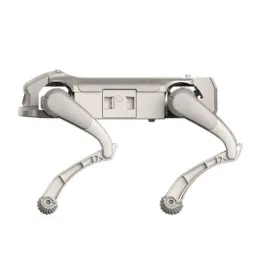
The AgiBot D1 Ultra is a compact quadruped robot designed for research, inspection, and mobile robotics in real-world environments.
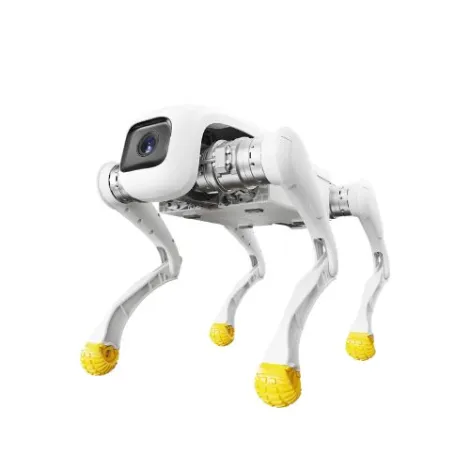
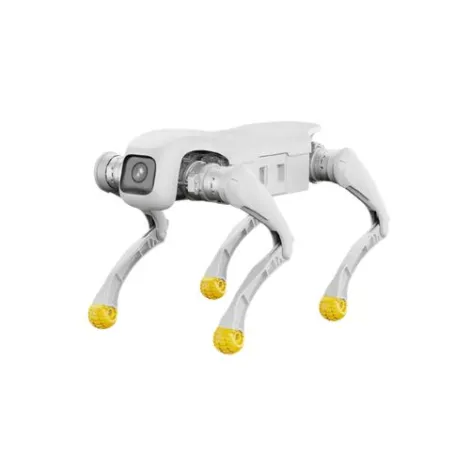
The AgiBot D1 Pro quadruped robot is a four-legged mobile platform designed for dynamic locomotion, complex terrain exploration, robotic demonstrations, and certain research or lightweight mobile robotics projects.