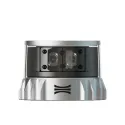
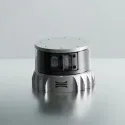
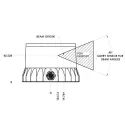
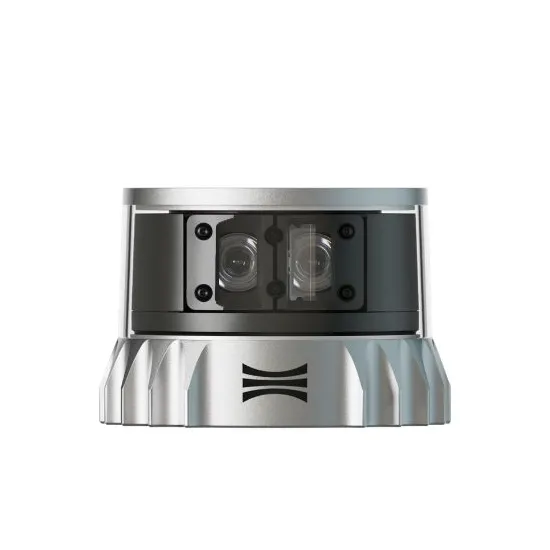
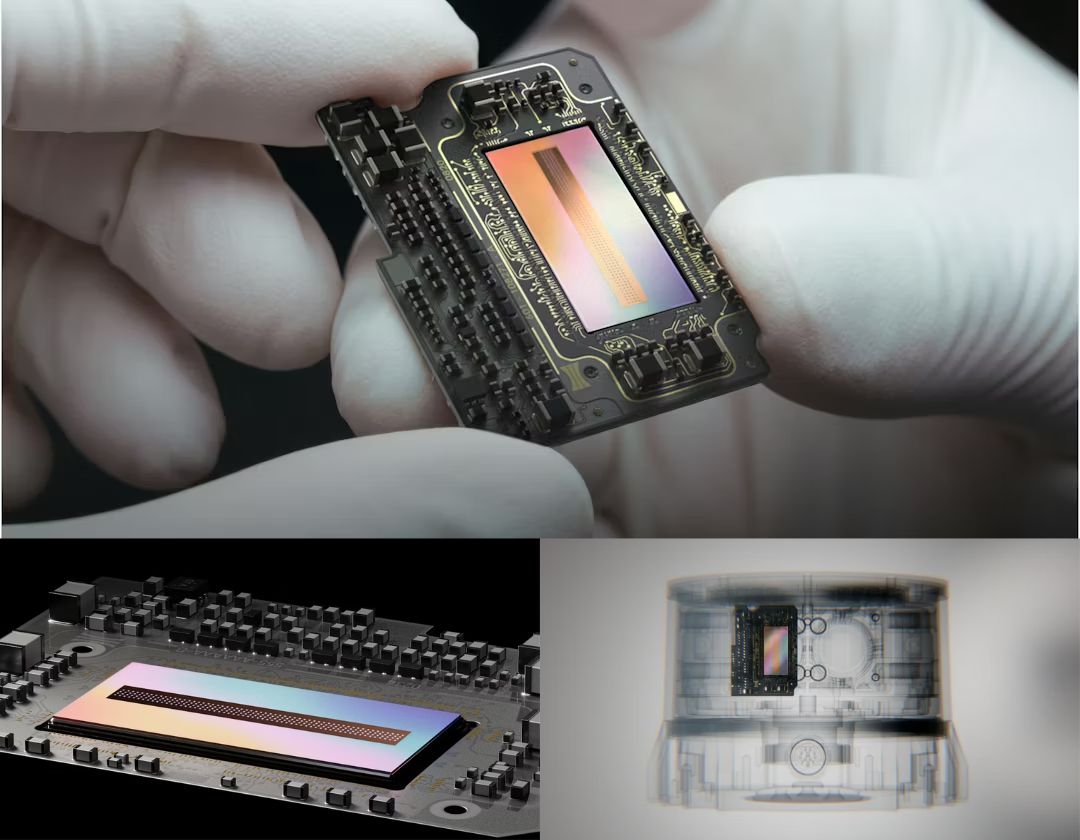
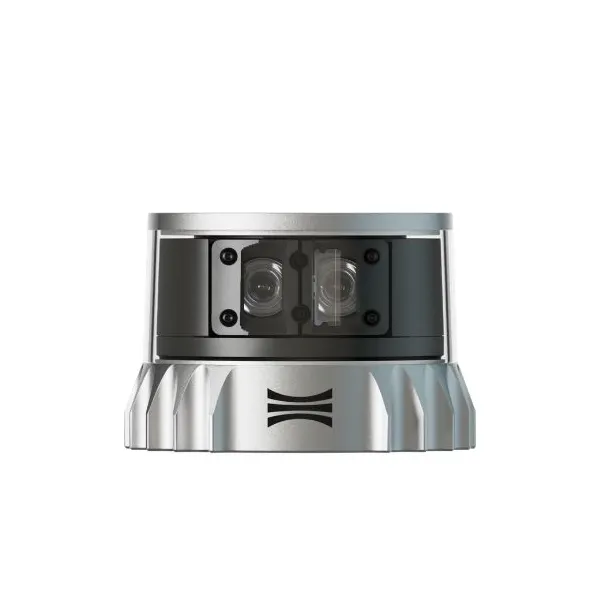
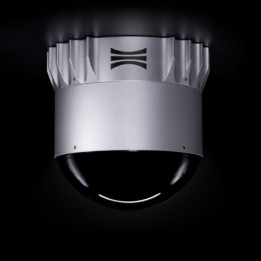
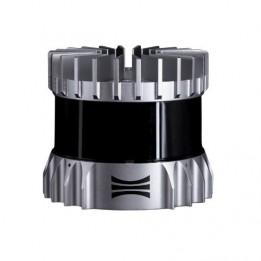
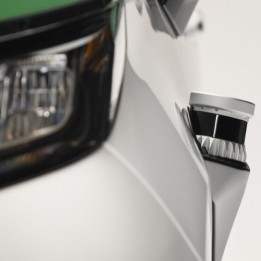
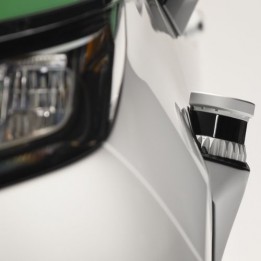
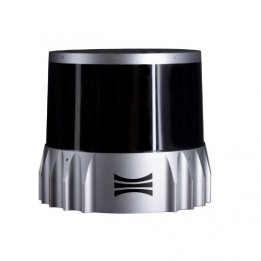
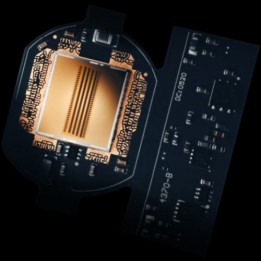
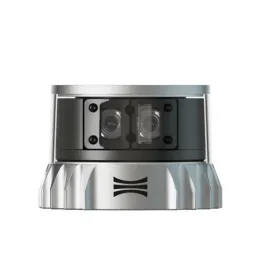
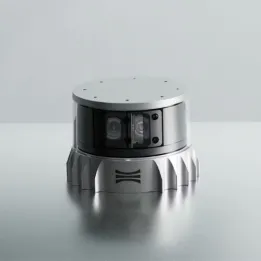
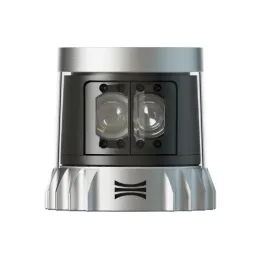
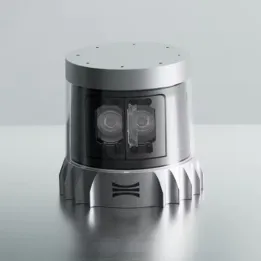
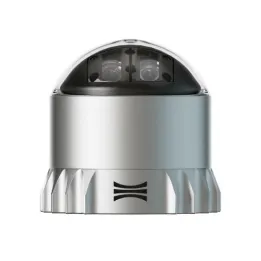
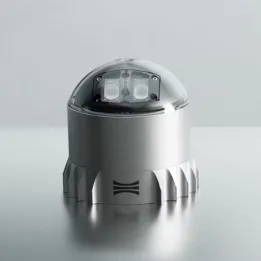
The Ouster OS1 REV8 LiDAR is suited to projects where the goal is to combine mid-range performance, high resolution, and rich data output. It is designed for systems that need to observe the environment with enough detail for perception while retaining useful range for more distant detection.
- Mobile robotics: navigation, obstacle avoidance, localization, and onboard perception.
- Autonomous vehicles: object detection, scene understanding, and mid-range perception.
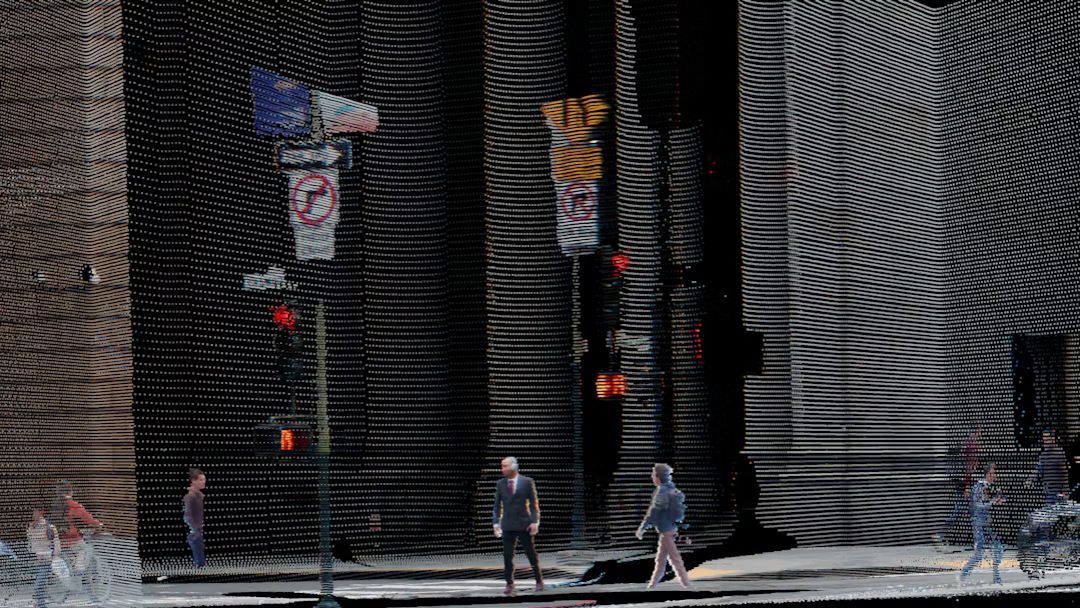
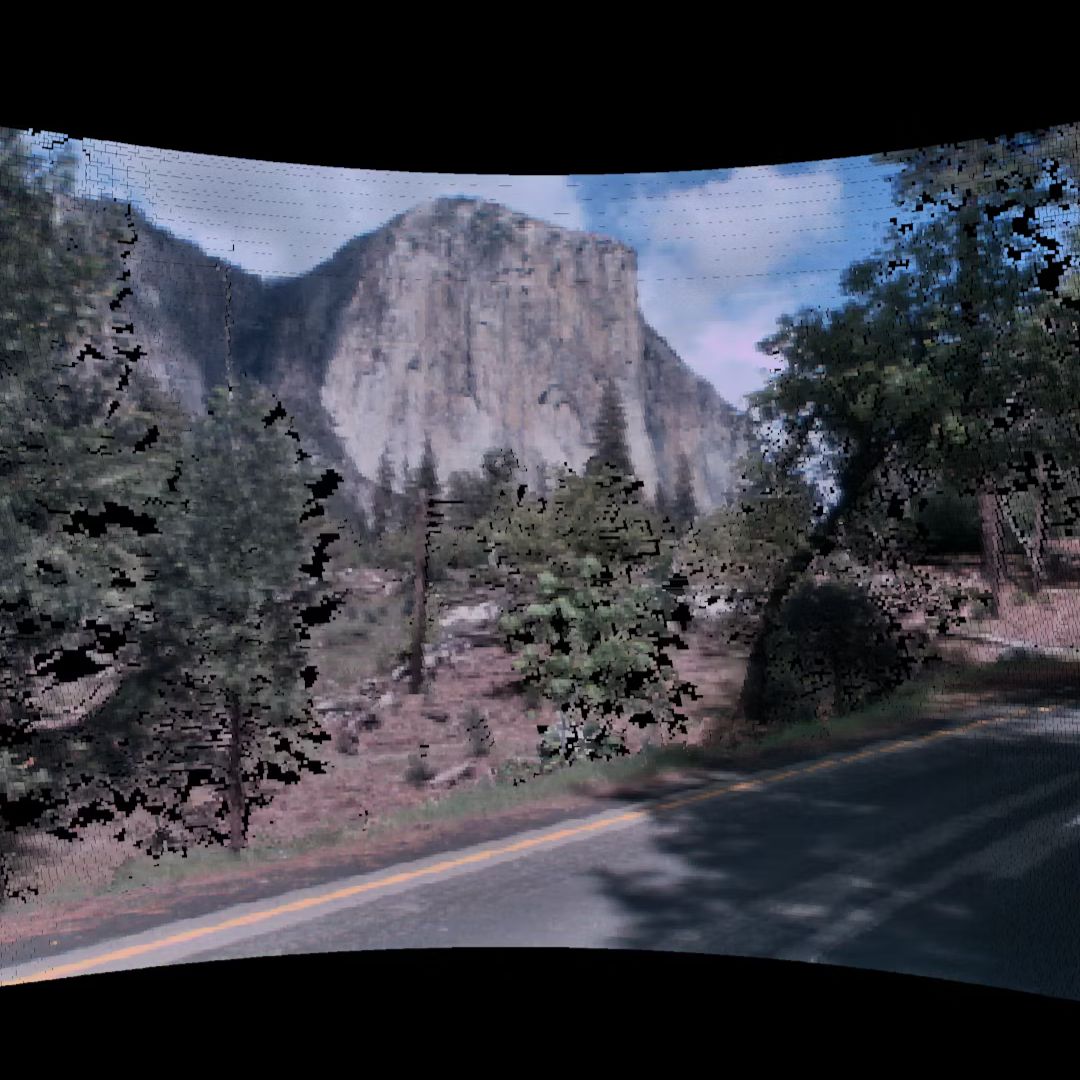
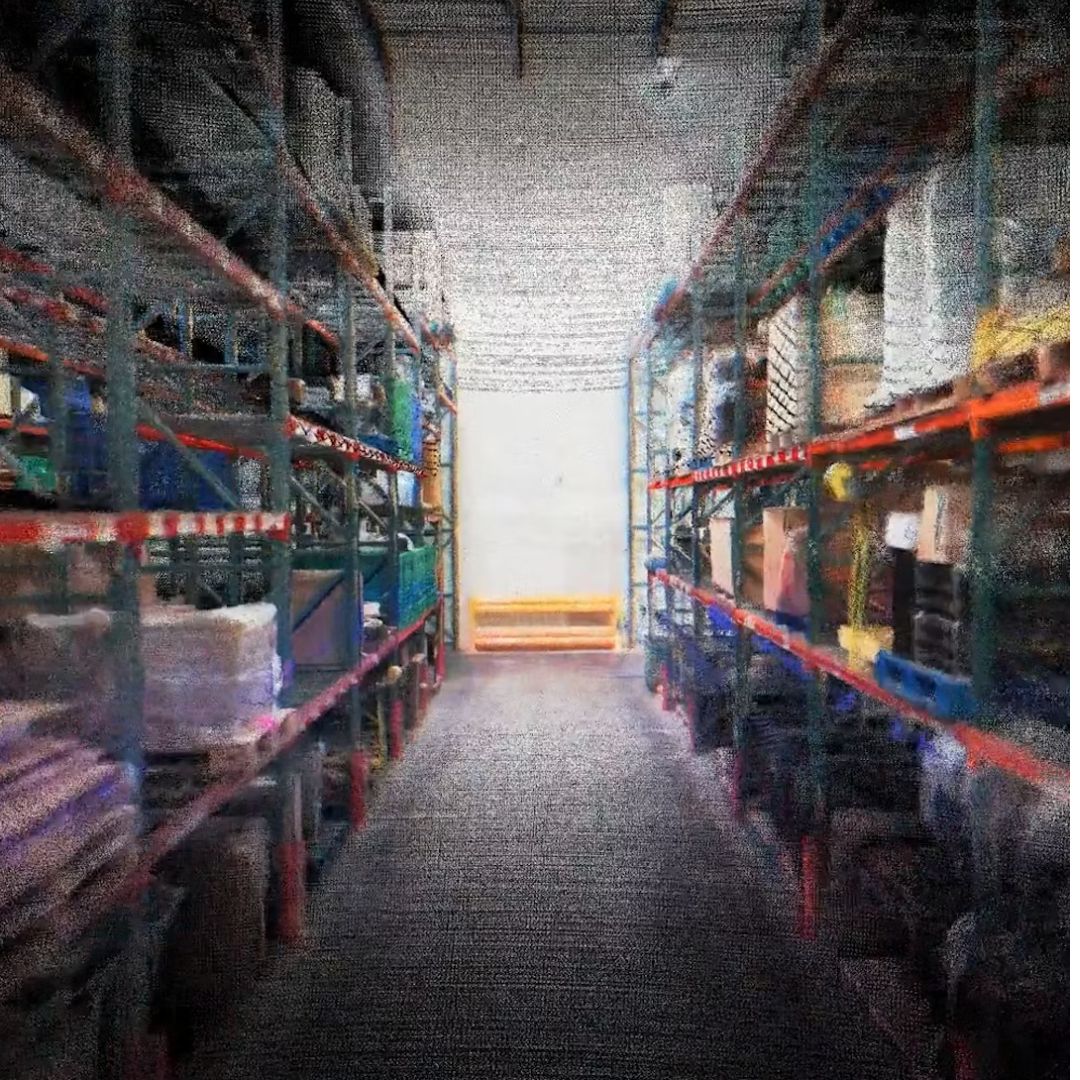
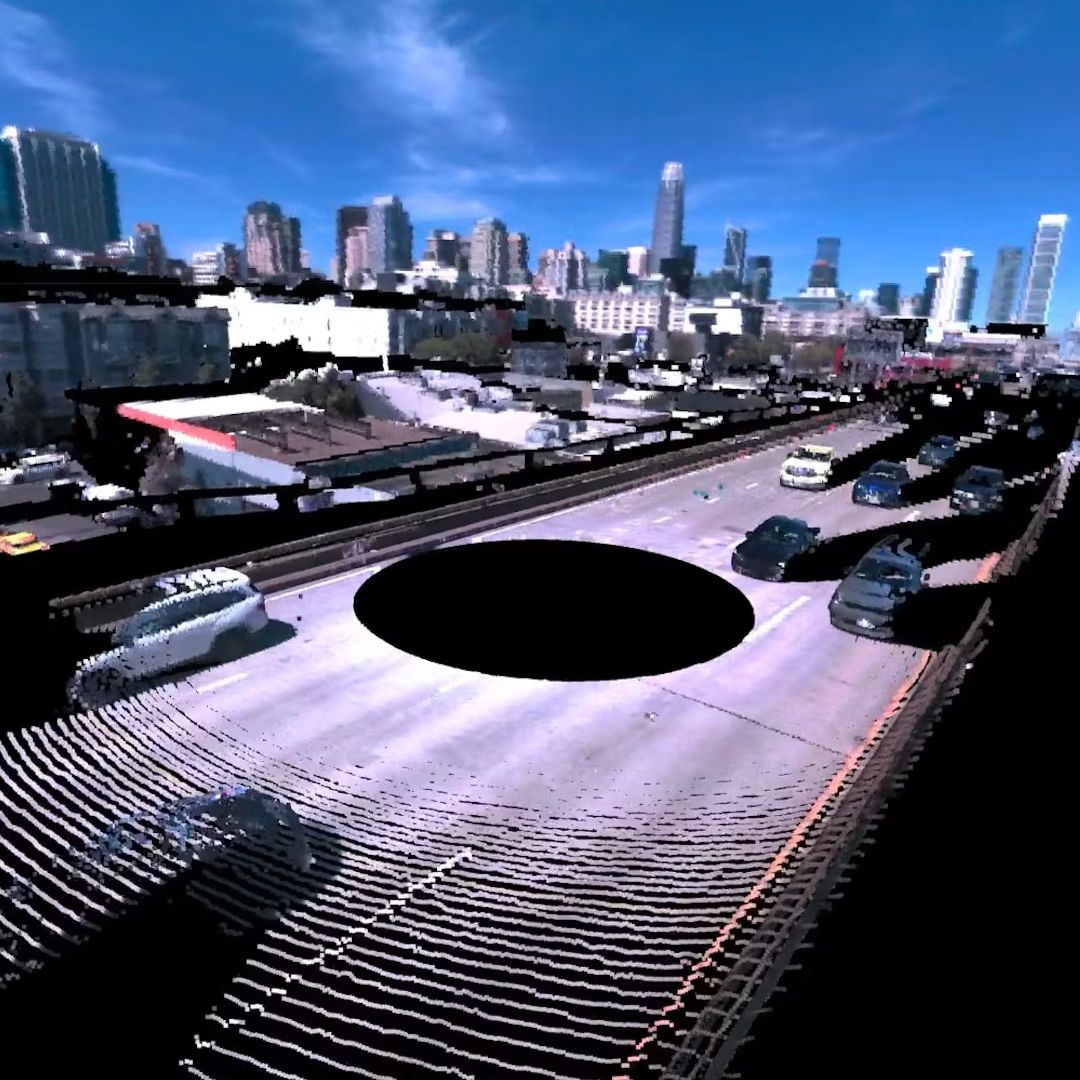
- Mapping: acquisition of dense point clouds with native color data.
- Smart infrastructure: scene analysis, environment monitoring, and outdoor perception.
- Drones and special robots: 3D reconstruction, inspection, and onboard perception.
- Research and development: integration into workflows with ROS 2, ROS, MATLAB, NVIDIA Driveworks, NVIDIA Isaac, and Isaac Sim.
In an integration context, the OS1 REV8 features UDP over gigabit Ethernet output, an HTTPS API control interface, as well as functions such as the on-sensor 3D Zone Monitor, multi-sensor phase lock, azimuth masking, minimum range adjustment, and a low-power standby mode. It can therefore serve as a working base for navigation, zone monitoring, sensor fusion, or robotic vision projects.
Technical specifications of the Ouster OS1 REV8 LiDAR
| Type | High-resolution mid-range imaging lidar |
| Hardware version | REV8.0 |
| Range at 80% reflectivity | 170 m |
| Range at 10% reflectivity | 90 m |
| Maximum representable range | 250 m |
| Minimum range | 0.0 m (0.3 m optional, 0.5 m default depending on configuration) |
| Horizontal field of view | 360.0° |
| Vertical field of view | 44.0° (+22.0° to -22.0°) |
| Vertical resolution | 32, 64, or 128 channels |
| Horizontal resolution | 512, 1024, 2048, or 4096 |
| Rotation rate | 5, 10, 15, 20, 30, or 40 Hz |
| Angular sampling accuracy | ±0.01° vertical / ±0.01° horizontal |
| Range resolution | 0.1 cm |
| False positive rate | 1 / 10,000 |
| Range precision | from ±0.25 cm to ±1.5 cm (typical) |
| Range accuracy | ±1.25 cm on Lambertian targets, ±2.5 cm on retroreflectors |
| Laser wavelength | 865 nm |
| Laser class | Class 1 |
| Beam diameter at sensor output | 9.5 mm |
| Beam divergence | 0.18° (FWHM) |
| Number of returns | up to 2 |
| Maximum points per second | 10,485,760 pts/s |
| Data per point | RGB, range, signal, reflectivity, near-infrared, channel, azimuth angle, timestamp |
| Timestamp resolution | < 1 µs |
| Data latency | < 10 ms |
| Data integrity | End-to-end CRC across the full packet |
| Color depth | 48 bits total / 16 bits per channel |
| Dynamic range | 116 dB |
| Illuminance at SNR 10 dB | 3 lux |
| Maximum measurable illuminance | 2,000,000 lux |
| Metamerism index | 80 |
| Lidar connection | UDP over gigabit Ethernet |
| Control interface | HTTPS API |
| IMU | 3-axis gyroscope + 3-axis accelerometer |
| IMU sampling | 640, 1280, or 2560 samples/s |
| Time synchronization | PTP, gPTP, NMEA $GPRMC, external PPS, internal clock |
| LiDAR operating modes | 512 @ 10/15/20/30/40 Hz; 1024 @ 10/15/20/30/40 Hz; 2048 @ 10/15/20 Hz; 4096 @ 5/10 Hz |
| Configurable functions | 3D Zone Monitor, return ordering, minimum range, azimuth masking, multi-sensor phase lock, queryable intrinsic calibration, low-power standby |
| Power consumption | 10 to 20 W, 15 W nominal, 22 W peak at startup at -40 °C |
| Recommended power supply | at least 30 W continuous |
| Nominal voltage | 12 VDC or 24 VDC |
| Voltage range | 9 V to 58 V DC |
| Connector | Proprietary bayonet-style side connector, Ethernet 1000BASE-T |
| Dimensions | 87 mm diameter; height 58.35 mm without cap / 74.2 mm with halo cap |
| Weight | 500 g without halo cap / 580 g with halo cap |
| Mounting | Top and bottom M3 fasteners, 2 mm locating pin holes, M6 screw on top |
| Bottom mounting plate | aluminum, 530 g, 110 × 110 × 20.5 mm |
| Operating temperature | -40 °C to +85 °C |
| Storage temperature | -40 °C to +105 °C |
| Protection rating | IP68 / IP69K |
| Shock resistance | 100 G |
| Vibration resistance | 10 Grms |
| Compatible software | Ouster Python SDK, C++ Driver, Ouster Studio |
| Third-party integrations | ROS2, ROS, NVIDIA Driveworks, MATLAB, NVIDIA Isaac, NVIDIA Isaac Sim |
Resources for the Ouster OS1 REV8 LiDAR
FAQ about the Ouster OS1 REV8 LiDAR
What is the Ouster OS1 REV8 LiDAR used for?
The OS1 REV8 is used for embedded 3D perception in mobile robotics, autonomous vehicles, mapping, automation, and smart infrastructure projects.
What is the range of the Ouster OS1 REV8?
The sensor has a range of 90 m on a 10% reflectivity target and a range of 170 m on an 80% reflectivity target, with a maximum representable range of 250 m.
What is the field of view of the Ouster OS1 REV8?
The OS1 REV8 features a 360° horizontal field of view and a 44° vertical field of view, making it suitable for mid-range use cases that require both useful range and good perception density.
Does the Ouster OS1 REV8 provide a color point cloud?
Yes, the sensor supports a native RGB-D color point cloud, useful for advanced perception, sensor fusion, and scene analysis workflows.
Is the Ouster OS1 REV8 compatible with ROS 2?
Yes, the OS1 REV8 is compatible with ROS 2, ROS, MATLAB, NVIDIA Driveworks, NVIDIA Isaac, and Isaac Sim.