
New
ROBOTIS HX5-D20 Robotic Hand (MLT / MRT)

ROBOTIS HX5-D20 Robotic Hand (MLT / MRT)

ROBOTIS HX5-D20 Robotic Hand (MLT / MRT)
Robotis | A-000000-08098
€6,960.00
20 perc. French VAT inc.

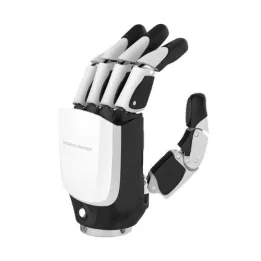
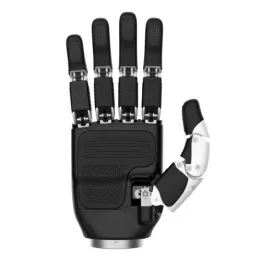
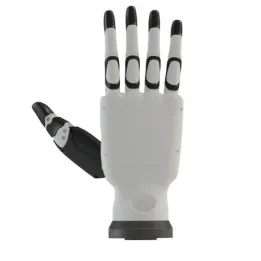
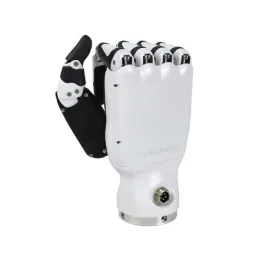
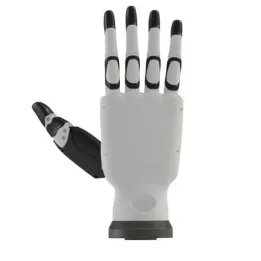
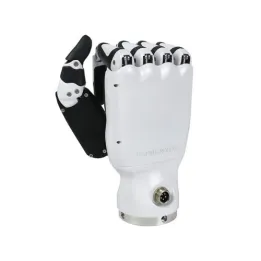
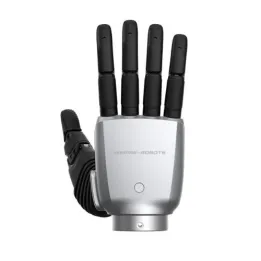
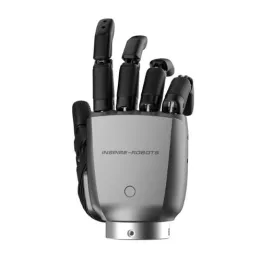
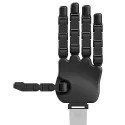
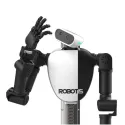
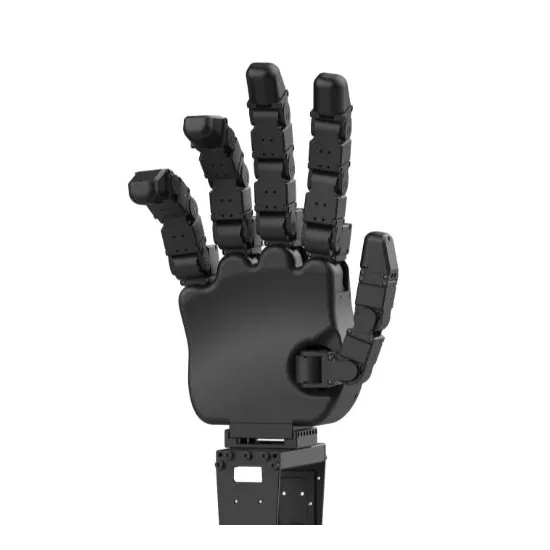
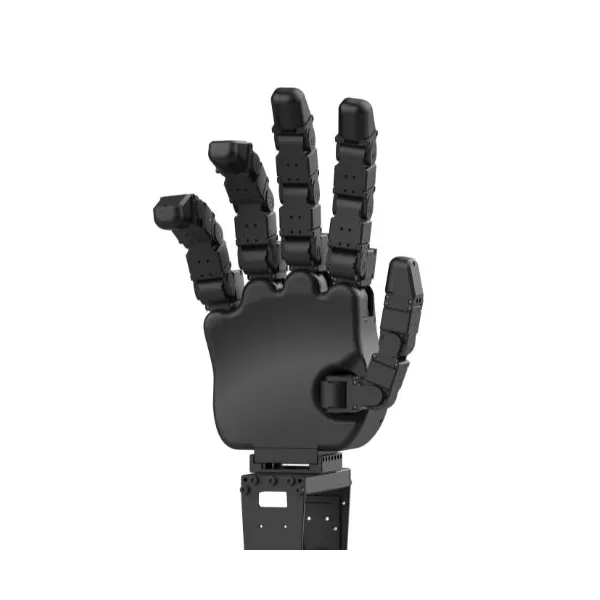
The ROBOTIS HX5-D20-MLT/HX5-D20-MRT hands are 5-finger 20 DOF robotic hands with tactile sensors, designed for dexterous manipulation and ROS 2 integration in research and advanced robotics.
Quantity
Contact us to find out about delivery times

Create a cart and turn it into a quote instantly!
Payment methods (see T&C)
Debit card
PayPal
Payment by invoice
Wire transfer

ROBOTIS robotic hands: key points

  • Two versions: HX5-D20-MLT (left hand) and HX5-D20-MRT (right hand).
  • 5-finger hand – 20 DOF: 4 degrees of freedom per finger for movements close to those of a human hand.
  • Direct-drive actuation: each finger joint is driven by a DYNAMIXEL XM335-T323-T in direct drive (robustness, reduced backlash, simplified control).
  • Integrated tactile sensors: a sensor at the tip of each finger (TIP sensor) measures contact pressure and helps stabilize grasps.
  • Performance: maximum fingertip force 14 N; maximum payload 15 kg; control frequency 1 kHz.
  • Communication & control: RS-485 multidrop, integration via ROS 2 + ros2_control.
  • Power supply: 24 V
  • To be planned for: depending on your environment, the SMPS (power supply) and the U2D2 PHB Set (external power hub for DYNAMIXEL) are not included.

Applications and project types (dexterous grasping, fine manipulation, data collection)

The HX5-D20 robotic hands from Robotis are intended for teams (labs, universities, integrators) developing dexterous manipulation scenarios: complex grasps, repositioning, interactions with delicate objects, and tasks requiring contact sensitivity.

ROBOTIS highlights a hand capable of going beyond simple grasping by perceiving texture and shape in order to perform highly dexterous tasks.

Software ecosystem (ROS 2, ros2_control, teleoperation, simulation)

The platform is based on ROS 2 (Jazzy) and the ros2_control framework (100 Hz control loop).

The joints are driven by XM335 actuators (position mode) through a communication architecture combining U2D2 (RS-485, Dynamixel Protocol 2.0), a controller board that converts RS-485 into 5 TTL channels, and state feedback including tactile sensors via the state interfaces of ros2_control.

It can be used for teleoperation, data collection, and model training (imitation learning / reinforcement learning), as well as in simulation environments (e.g. Gazebo/RViz launch).

Technical specifications – ROBOTIS HX5-D20 (MLT / MRT)

Number of fingers5
Degrees of freedom20 (4 DOF / finger)
Finger actuatorDYNAMIXEL XM335-T323-T (direct drive)
Fingertip sensors (TIP)9-array sensor, value 0 to 255
Maximum fingertip force14 N
Maximum payload15 kg
Control frequency1 kHz
CommunicationRS-485 multidrop (default 4 Mbps; 9,600 bps to 6 Mbps)
Protocol / formatRS485 Asynchronous Serial (8bit, 1 stop, no parity); digital packet command
Operating modeDirect Control Mode / Preset Motion Mode
Power supply24 V
Weight1,000 g ± 2%
Temperature-5 to 55 °C
CurrentStandby 370 mA; Peak 2.6 A
FeedbackPosition, speed, current, temperature, input voltage, etc.

Resources – ROBOTIS HX5-D20 hands (MLT / MRT)

FAQ – ROBOTIS HX5-D20 hands (MLT / MRT)

What is the difference between HX5-D20-MLT and HX5-D20-MRT?

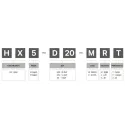
The difference is the orientation: MLT = left hand, MRT = right hand. The main specifications are identical.

What are the tactile finger sensors used for?

They are used to measure contact pressure in order to better stabilize the grasp, detect contact, and interact with more delicate objects.

Which software stack is planned?

A ROS 2 integration based on ros2_control, with tactile sensor reading via state interfaces and real-time trajectory execution.

What should I plan for regarding power supply / accessories?

The power supply is 24 V. Depending on your environment, the SMPS (power supply) and U2D2 PHB Set may be required and are not included in the base package.

Are these hands suitable for research (data, imitation learning, RL)?

Yes: they are suitable for teleoperation, data collection, and model training (imitation learning / reinforcement learning) in a ROS 2 workflow.

Customers who viewed this item also viewed